
Applications
Fibre Optic Trenching NZ
Fibre rollouts need a narrow, consistent trench that protects the duct or conduit while disturbing as little ground as possible. Whether it's a rural fibre run across farmland or a subdivision and footpath rollout in town, the machine has to match the ground and the job, not the other way round.
The Job
What This Involves
Fibre trenching typically means long, continuous runs at a shallow-to-moderate depth, often through a mix of topsoil, clay, rock and existing hard surfaces such as asphalt, concrete or compacted metal. Productivity is usually measured in metres per hour or metres per day, and reinstatement cost is directly tied to how narrow and clean the cut is — a narrower trench means less spoil to handle and less footpath or berm surface to make good afterwards.
Machine Selection
Why the Right Machine Matters
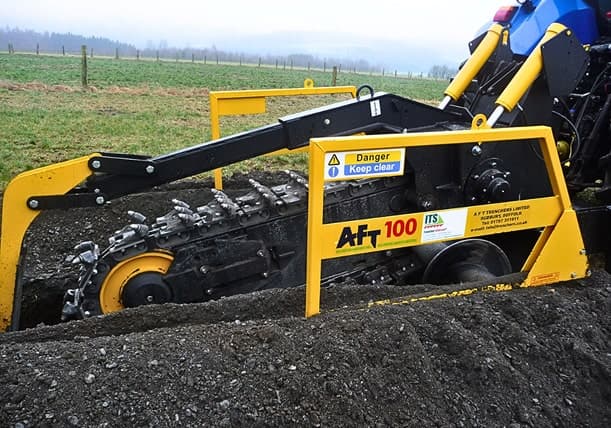
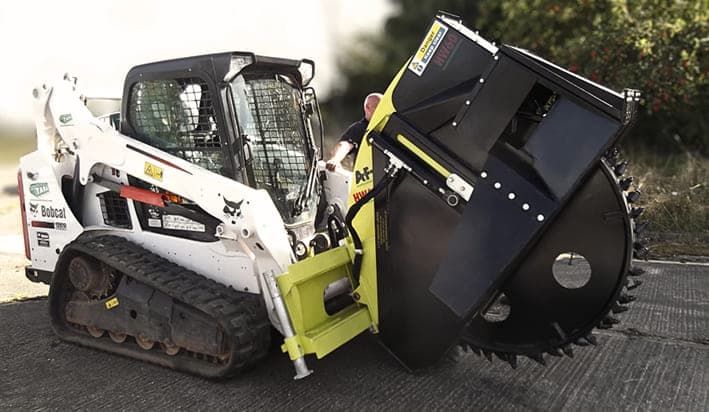
A rock-capable wheel trencher keeps cutting through basalt-hard or rocky ground where a standard chain would slow right down, making it well suited to long rural fibre runs through variable ground. A tractor-mounted chain trencher gives more flexibility on depth and width across softer, mixed ground, and a skid steer-mounted unit handles narrow, hard-surface cuts through concrete and asphalt on urban footpaths with minimal disruption.
Things Worth Considering
- Ground type along the full run — soft soil, clay, rock, or existing hard surfaces like asphalt and concrete
- Required trench width and any conduit-count allowance set by the network operator
- Depth requirements set by the network operator or local authority for the fibre service being laid
- Carrier already available on site (tractor or skid steer) and its horsepower or hydraulic flow
- Reinstatement standard required, particularly on footpaths, berms and sealed roads
Suited Machines
AFT Trenchers for Fibre Trenching
Real machines, real specs — every figure below comes straight from the product specification, not this page.
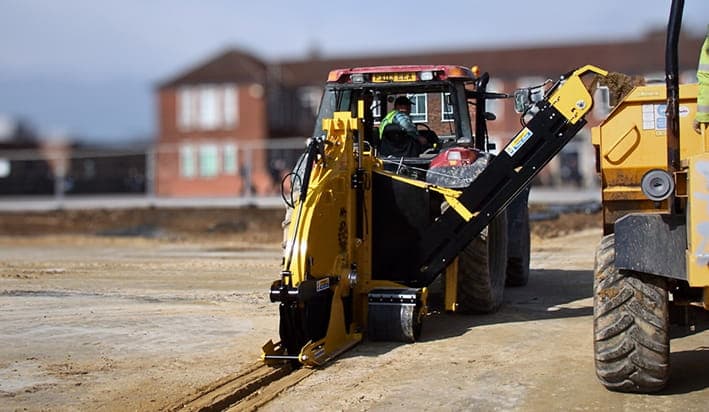
Wizz Wheel 75
Depth: 0.75m
Width: 50–150mm
AFT100
Depth: Up to 1.6m
Width: 125–300mm (400mm version available)
HW60
Depth: 0.6m (0.7m optional)
Width: 50 / 75 / 100 / 125 / 200mm
Fibre Trenching is one of the applications TrenchWorks supports most often in the Civil Engineering sector. For the full range of applications and considerations for that industry, see the Civil Engineering industry guide, or read the complete Trenchers NZ guide for how this fits into choosing a trencher generally.
Common Questions
Frequently Asked
What's the difference between a chain trencher and a wheel trencher for fibre work?
A chain trencher cuts with a rotating digging chain and generally offers more flexibility across depth and width settings on mixed ground. A wheel trencher cuts with a rotating toothed wheel and is typically faster and better suited to hard, rocky or basalt-like ground — the Wizz Wheel 75 in the AFT range is rock-wheel capable for exactly this reason.
Can fibre trenching be done through footpaths and sealed roads without full closures?
In many cases, yes. A skid steer-mounted rock wheel like the HW60 cuts a narrow trench through concrete and asphalt with minimal road disruption, which is why it's a common choice for urban fibre installation on busy streets.
Ready to Put a Trencher to Work?
Talk to the TrenchWorks team about your project, or request a quote for the right machine for the job.