Applications
Water Pipeline Trenching NZ
Water pipeline trenching covers potable water reticulation on subdivision and civil sites — cutting a clean, consistent trench for a pressurised main, often on tighter, more constrained ground than a rural irrigation run and closer to existing underground services.
The Job
What This Involves
Pipe-laying trenches need a flat, even trench bottom (a bedding layer is usually placed before the pipe goes in) and a width that comfortably accommodates the pipe diameter plus working clearance and haunching. Runs are often shorter and more constrained than farm irrigation work, so manoeuvrability and control around existing services matter as much as production speed.
Machine Selection
Why the Right Machine Matters
On tighter civil or subdivision sites, an excavator-mounted unit gives more control in confined spaces and around existing services than a fixed-direction tractor-mounted machine. Where a run is longer and more open, a tractor-mounted trencher can still be the more efficient choice. Trench width should be matched to the pipe diameter and bedding requirements rather than cut wider than necessary — a wider trench means more spoil, more bedding material, and more reinstatement cost.
Things Worth Considering
- Pipe diameter and the bedding/haunching width required around it
- Depth required for frost cover, vehicle loading, or local authority standard
- Length and continuity of the run — confined subdivision or civil site vs. more open ground
- Ground conditions, including any rock or clay that affects trench wall stability
- Existing services nearby that need to be identified before trenching starts
Suited Machines
AFT Trenchers for Water Pipeline Trenching
Real machines, real specs — every figure below comes straight from the product specification, not this page.
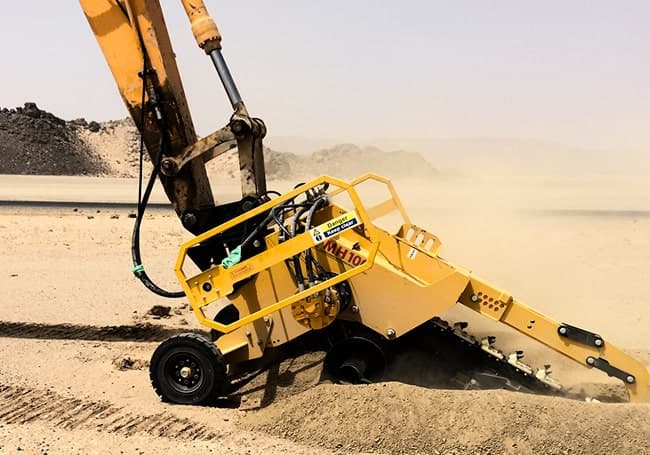
MH100
Depth: 1.0m – 1.8m (staged options)
Width: 125–400mm (standard/bullet chain)
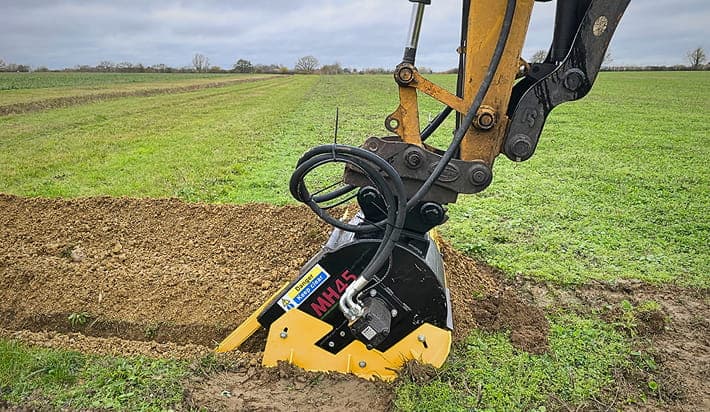
MH45
Depth: 0.8m / 1.0m / 1.2m
Width: 125–200mm (64–84mm narrow option)
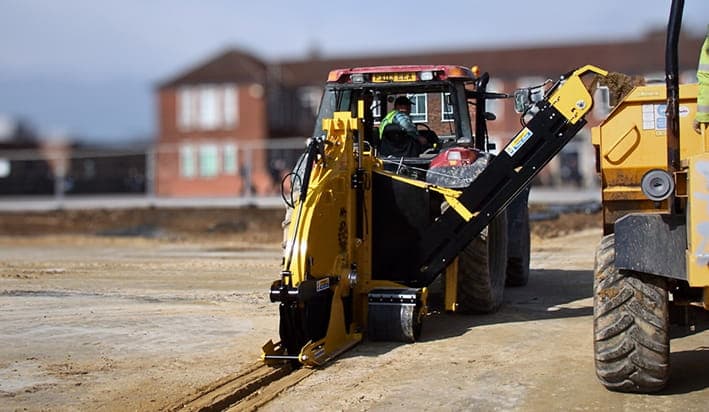
Wizz Wheel 75
Depth: 0.75m
Width: 50–150mm
Water Pipeline Trenching is one of the applications TrenchWorks supports most often in the Civil Engineering sector. For the full range of applications and considerations for that industry, see the Civil Engineering industry guide, or read the complete Trenchers NZ guide for how this fits into choosing a trencher generally.
Common Questions
Frequently Asked
What trench width is needed for a water main?
It's set by the pipe diameter plus the bedding and working clearance your design calls for — TrenchWorks can match this against the real trench width range of each AFT machine rather than guessing a figure.
Is an excavator or a tractor-mounted trencher better for water pipeline work?
It depends on the site — an excavator-mounted unit suits confined subdivision or civil ground with existing services nearby, while a tractor-mounted trencher can be more efficient on longer, more open runs. TrenchWorks can talk through which fits your specific job.
Ready to Put a Trencher to Work?
Talk to the TrenchWorks team about your project, or request a quote for the right machine for the job.