
Applications
Sports Turf & Golf Course Trenching NZ
Sports turf and golf course drainage sit apart from general civil trenching because the surface itself is the asset. Trenching has to move water efficiently without leaving a playing surface that's torn up, uneven, or out of action for weeks.
The Job
What This Involves
Turf drainage generally falls into two categories: primary drainage (deeper trenches carrying water to an outlet) and secondary or sand-slit drainage (narrow, closely spaced slits backfilled with sand or gravel to improve surface permeability). Golf course drainage adds the extra constraint of working around greens, fairways and existing irrigation without disrupting play for longer than necessary.
Machine Selection
Why the Right Machine Matters
Turf protection is the key differentiator here. Wide rubber tracks or tyres, a turf disc to protect the surface either side of the cut, and a rear compaction roller all reduce the visible impact of trenching on a playing surface. For sand slitting specifically, a machine that cuts and backfills in the same pass — with no soil removed — gets the surface playable again far faster than a two-step cut-and-fill process.
Things Worth Considering
- Primary drainage (depth-focused) vs. secondary/sand-slit drainage (spacing and backfill-focused)
- Turf protection — track/tyre footprint, turf discs, and compaction rollers to minimise surface disruption
- Backfill material (sand, gravel, lytag) and whether the machine can place it in the same pass
- How quickly the surface needs to be playable again
- Working around existing irrigation, greens and fairway contours
See Also
Suited Machines
AFT Trenchers for Sports Turf Trenching
Real machines, real specs — every figure below comes straight from the product specification, not this page.
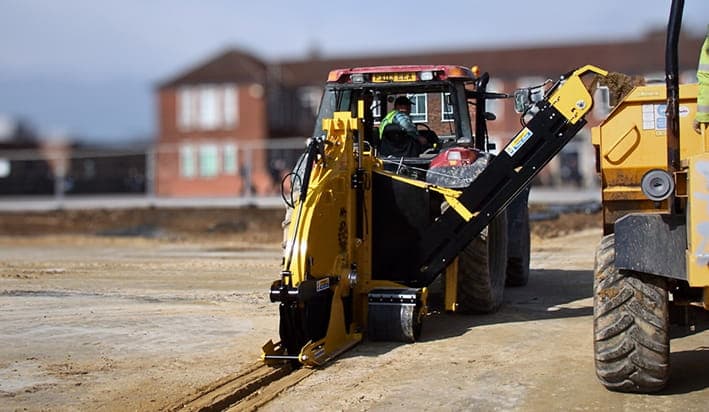
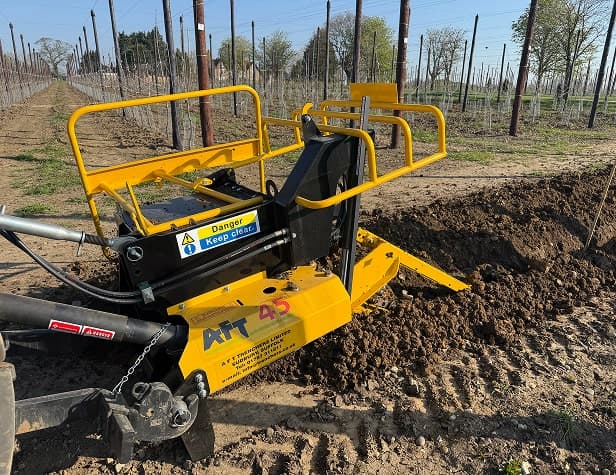
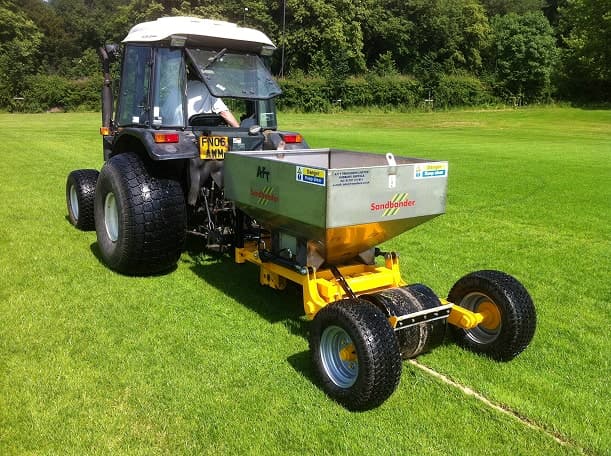
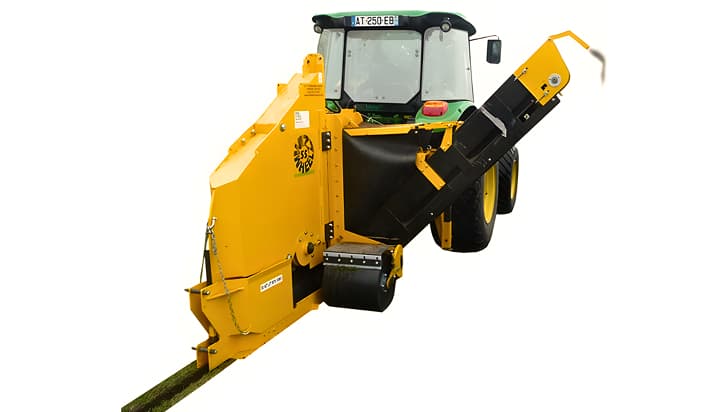
Wizz Wheel 75
Depth: 0.75m
Width: 50–150mm
AFT45
Depth: 0.4m – 1.2m (configuration dependent)
Width: 40–200mm (configuration dependent)
Sandbander
Depth: 0.25m
Width: 25mm or 35mm options
Sports Turf Trenching is one of the applications TrenchWorks supports most often in the Sports Turf sector. For the full range of applications and considerations for that industry, see the Sports Turf industry guide, or read the complete Trenchers NZ guide for how this fits into choosing a trencher generally.
Common Questions
Frequently Asked
What's the difference between primary and secondary (sand-slit) drainage?
Primary drainage is deeper trenching that carries water to an outlet, usually less frequent across a surface. Secondary or sand-slit drainage is a pattern of narrow, closely spaced slits backfilled with sand or gravel to improve how quickly the surface itself drains after rain.
How fast can a golf course or sports field be back in play after trenching?
It depends on the method and machine — sand-slitting equipment that cuts and backfills in one pass with no soil removed can return a surface to playable condition within about 24 hours, weather and turf recovery permitting.
Ready to Put a Trencher to Work?
Talk to the TrenchWorks team about your project, or request a quote for the right machine for the job.